


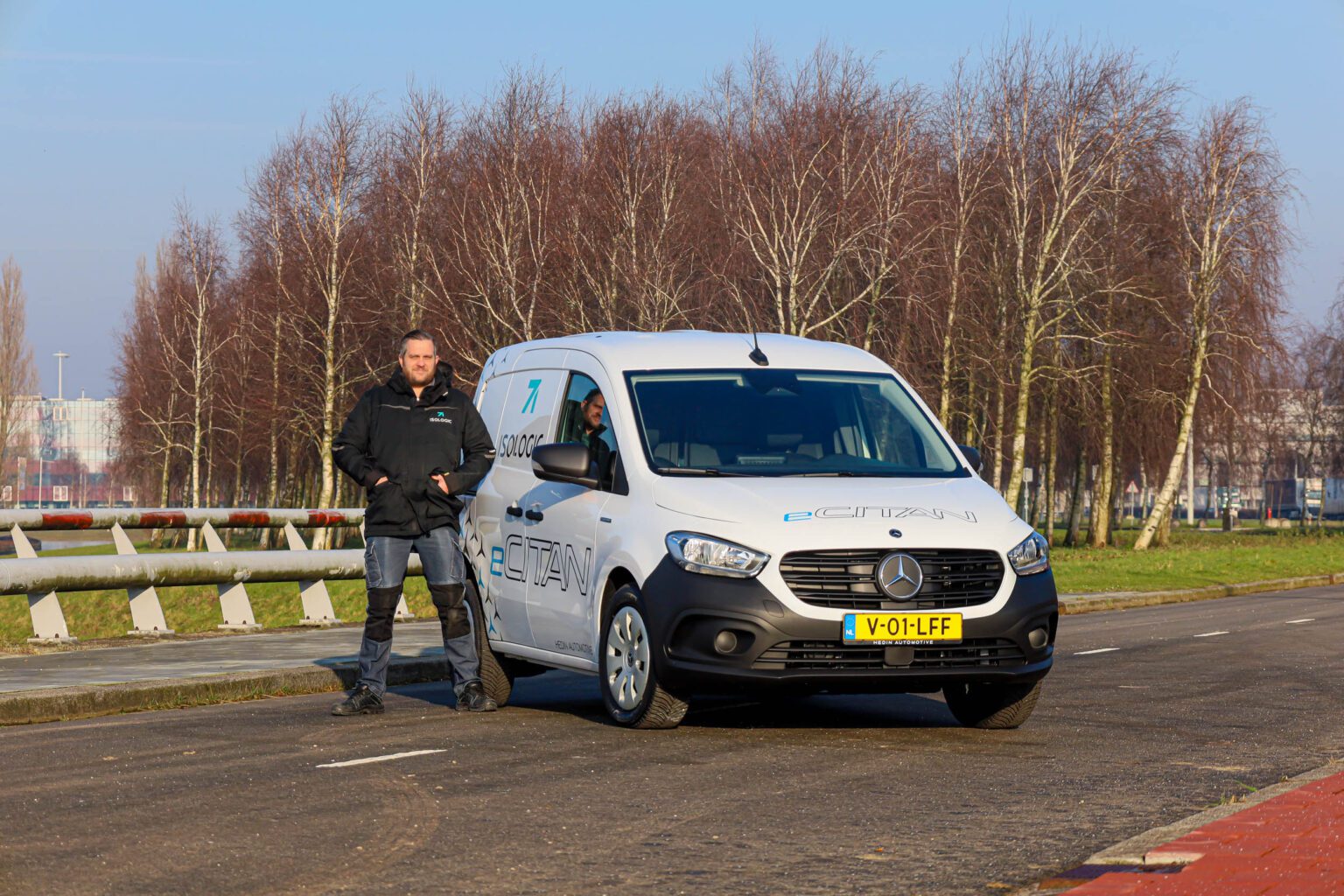
Isologic is electrifying its fleet: ready for zero-emission zones and city centers

The energy transition is no longer a distant goal on the horizon. It’s day-to-day reality. Cities are introducing zero-emission zones, environmental regulations are tightening, and traditional diesel vehicles are disappearing from urban streets at an accelerating pace. For many logistics companies, that’s a problem for tomorrow. For us, it’s a reality we’re preparing for deliberately.
At Isologic, we’re electrifying our fleet in phases and with a clear purpose. Not because it sounds good, but because it’s essential for maintaining high-quality logistics in a changing environment.
Regulation is moving faster than the market
In the Netherlands, zero-emission zones in cities aren’t slowly emerging. They’re already here. For existing diesel vehicles, municipalities are raising the bar year after year. Euro 5 trucks are being phased out, new diesel vehicles are rapidly losing access, and the financial thresholds for polluting vehicles keep going up.
That’s already a challenge for standard logistics. For specialist transport – such as medical shipments and ADR movements – it’s a strategic issue. Hospitals, research institutes, and production sites are often located in city centers and densely populated areas, precisely where environmental rules are introduced first.
If you’re only starting to adapt at that point, you’re already late.
Leading the way instead of reacting
That’s why Isologic hasn’t waited for regulation to catch up with us. Electrifying our fleet isn’t a one-off investment, but part of a broader strategy where continuity, safety, and accessibility come together.
We’re deliberately investing in electric and hybrid vehicles for routes where zero-emission driving is becoming a hard requirement, especially in:
- inner-city hospital routes
- distribution within environmental and low-emission zones
- shorter but time-critical movements
- routes where noise and emissions matter operationally
For us, electrification isn’t about symbolism. It’s about usability. It’s about being absolutely sure that, tomorrow as well as today, we’re still allowed to go where healthcare providers and industry rely on us.
No illusions about technology
Electric driving sounds simpler than it is. Charging infrastructure, range, winter performance, and peak demand – they all come together in the reality of logistics. If you just buy vehicles and change nothing else, you’ll hit a wall sooner or later.
That’s exactly why we opt for controlled implementation. New vehicles are assessed not only on sustainability, but also on:
- stability within our existing processes
- compatibility with ADR requirements
- reliability in day-to-day operations
- fit within our existing network of routes
We’d rather build step by step than grow big and fragile. The operational reality has to work.
Sustainability isn’t a side project
At Isologic, sustainability isn’t a separate theme or standalone project. It touches everything we do: from vehicle selection to route planning, from warehouse partners to training.
That’s why we’re also preparing for certification under the CO₂ Performance Ladder, the Dutch sustainability instrument developed by the SKAO foundation. Not as a marketing prop, but as a measuring stick. Insight into emissions leads to better choices – in fuel, in vehicles, and ultimately in how you run your business.
For us, making logistics more sustainable isn’t something alongside logistics. It is logistics.
Supporting our customers
Electrification isn’t just our challenge. It affects our customers as well. If you want to keep your operations running in city centers, you need partners who still have access. And access is increasingly determined by emissions profiles.
By investing in electric vehicles, we’re safeguarding not only our own continuity, but also the continuity of the wider chain our customers are part of. If you need medicines, medical isotopes, or dangerous goods delivered into urban areas today, promises are worth very little – proven availability is what counts.
That’s what we want to be held accountable for.
Ready for what’s coming
The energy transition isn’t a question of idealism. It’s a question of operational excellence. If we want to keep doing our job well – even as regulations shift – we have to keep adapting.
We know not every kilometer will be electric tomorrow. We also know the logistics world is becoming more complex for many carriers. And that’s exactly why accelerating in the right places matters.
We choose preparation over surprises. Accessibility over limitations. And responsibility over waiting to see what happens.